
"Western food history"
400 article(s) found

A brief introduction to the cultivation of fresh-flavored Ugandan boutique coffee beans, geographical location, climate and altitude
Ugandan coffee is mainly exported to the European Union, of which Germany, Italy and other countries are the largest buyers of coffee. Uganda is the country of origin of coffee grown in Robusta, but commercial cultivation of Arabica species here did not begin until early 1900. Today, there are still a large number of wild robusta coffee trees in Uganda, which is rare in cities in the world. As a landlocked country, Uganda

The History and Culture of Coffee beans Coffee changes the World
United States: giving up hundreds of millions of inheritance rights for coffee beans in the 1970s and 1980s, the rulers and generals of Guatemala and El Salvador had huge coffee fields, devouring most of their profits, while farmers had no meals. Many farmers, especially Indians, joined the Communist guerrillas and attacked government forces, and the authorities responded with the Holocaust, aggravating the deep feud between coffee farmers and the government.

The Reform Movement of Japanese Coffee Culture-- the push of Modernization
In the last article in this series, "Frozen Coffee across the Ocean, the birth of Japanese Coffee Culture," we learned about the influence of the Netherlands on Japanese coffee culture in the Edo era. However, after the opening of Hong Kong and trade, Japan experienced Meiji Restoration and began to accept the West under the influence of the westerly wind from the east.

A brief introduction to the history and culture of the origin and development of soft and smooth Hawaiian boutique coffee beans
Agriculture is the pillar of the local economy, producing sugar cane, pineapple, coffee, bananas and so on, of which pineapple production ranks first in the world. [1] Hawaii is suitable for the growth of sugar cane. Two-thirds of the land in the archipelago grows sugarcane, producing about 1 million tons of crude sugar each year. It is equivalent to 10% of the total sugar consumption in the United States each year, so it is called the sugar island of the United States. [4] Food processing is the main industry, and there are a few oil refineries.
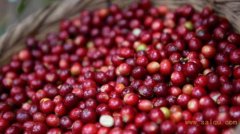
A brief introduction to the cultivation of high-quality and pollution-free boutique coffee beans in Uganda, geographical location, climate and altitude
The cultivation of coffee in Uganda is all small-scale family operation. The livelihood of 25% of the population is closely related to coffee production. About 500000 farms grow coffee, but mainly Robster. Robusta accounts for 90% of coffee production, and the remaining 1 is Arabica coffee. Arabica and Robusta are harvested from October to February. Ugandan coffee

Coffee culture in Southeast Asia
I don't know how you are in other parts of Southeast Asia, but I am always at a loss on the streets of Singapore, on the corner of Vietnam and on a sign in Malaysia. Although transliteration of things like coffee was widely used by clever ancestors in the early years of its spread, there is not much audio-visual barrier, even though Singaporeans always refer to coffee as Kopi, which is pronounced from Hokkienese.

The first share of Chinese coffee has not broken its cocoon. It is difficult for the coffee chain to join.
In 1773, the first British stock exchange was established at the Jonathan Cafe in Chais Hutong, London. History has always been strikingly similar, and 20 years later, Tondy Cafe was completed on Wall Street and became the predecessor of the New York Stock Exchange. When the shrewd owner of Tondy Cafe invited Wall Street pioneers into the room from under the plane tree, there was a wisp of coffee aroma intertwined with a lubricated taste.

Why is there a way out for cafes that "don't do their job"?
In China, a country with no history of coffee and no rigid demand for coffee, the shape of cafes is constantly evolving, spelling out more than just the quality of coffee. Since French Godfather Tian Deneng moved the first coffee tree to China in 1902, coffee has experienced more than a hundred years of development in the Chinese market. From the coffee wasteland where the coffee tycoons were afraid to stay away in the past, to the fact that Starbucks is now
What is white coffee? What is black coffee?
White coffee is a native and domestic product of Malaysia, which has a long history of more than half a century in Malaysia. Its history can be traced back to 1958. It is said that there was an old master who had been making coffee in a coffee shop for 30 years. One day he tried to use the method of going to Qiancunqing, without adding gum, vegetable oil or any ingredients to stir-fry the coffee. Then mix the skim evaporated cream.

The hometown of coffee, unique Ethiopian customs
Following Ka Pai (Wechat official account vdailycom) found that Ethiopia is a magical old country where Beautiful Cafe opens a small shop of its own. More than 100 years ago, it was called the representative of Africa, black hope. With a long history and profound civilization, it is the only country on the African continent that has not been colonized. In 1936, Italy briefly tried to occupy Ethiopia.

The collision between Oriental Tea Culture and Western Coffee Culture
Last autumn, Mr. Chen Zishan came to Beijing in Shanghai. One day he went to his hotel room to have coffee and gossip. He suddenly complained that the coffee was slightly black and tasteless. I went back to give it a try, and sure enough, I had a different taste, but I had a strong taste of vegetarian diet. No matter black tea or green tea, it was best to fill the first hot tea and mix it with coffee and milkshake. you can feel the bitter taste of tea and rich coffee

The Story of the Historical Origin of Costa Rican Coffee: an introduction to the cultivation of Organic Coffee in Costa Rica
For more information about coffee beans, please follow the Coffee Workshop (Wechat official account cafe_style) Educardo Matos History Costa Rica is a country next to Panama, located in the central United States, as a bridge between the North and the South, its location makes it a trading hub for aborigines. When outsiders arrived from the old world, he

A brief introduction to the flavor, taste and aroma characteristics of high-quality and pollution-free Ugandan boutique coffee beans
Later, when the ship replaced the sailboat, due to the shortened delivery time, people drank relatively fresh coffee beans. But people who are used to drinking Chen beans are not used to the fresh taste, so they desperately pursue old Java coffee, so that the Indonesian government and some businessmen deliberately store fresh beans in warehouses for one or two years and then sell them to consumers. In fact, compared with fresh beans, aged beans

Introduction to the fragrant coffee flavor and taste of the coffee in Hassanda Coffee Garden in Ecuador
Ecuador is divided into the western coast, the central mountains, the eastern Amazon River basin and the four central regions of the Galapagos Islands, with diverse climatic conditions. The western coastal plain belongs to the tropical rain forest climate, with an average temperature of 23-25 ℃. The central Andes. The intermountain basin in this area belongs to the savanna climate, and the mountain belongs to the subtropical forest climate, with perennial snow above 4000 meters above sea level. Annual average decline

From origin to popularity, 5 minutes of get coffee culture, after watching it, dare to say that you really understand coffee
Professional baristas follow the Coffee Workshop (official Wechat account cafe_style) about the origin of coffee there is a story about the origin of coffee: in the 6th century, a shepherd in Ethiopia found that his sheep became extremely excited after eating the fruit of a wild coffee tree. Out of curiosity, he also tasted the coffee. After tasting it, due to the cooking of coffee beans
The origin of coffee
The world's first coffee tree was found in the Horn of Africa. Local indigenous tribes often grind the fruit of coffee and knead it with animal fat to make many ball-shaped balls. These indigenous tribes use these coffee balls as precious food for soldiers who are about to go out to battle.

Coffee culture of Southeast Asia
I don't know how you are in other parts of Southeast Asia, but I am often at a loss in the streets of Singapore, the corners of Vietnam, or a certain signboard in Malaysia. Even though something like coffee was transliterated universally by clever pioneers at the beginning of communication, there was not much of a visual impediment, even though Singapore people always called coffee Kopi, which is pronounced from the Hokkien dialect

What's the difference between white coffee and black coffee?
White coffee is a native and domestic product of Malaysia, which has a long history of more than half a century in Malaysia. Its history can be traced back to 1958. It is said that there was an old master who had been making coffee in a coffee shop for 30 years. One day he tried to use the method of going to Qiancunqing, without adding gum, vegetable oil or any ingredients to stir-fry the coffee. Then mix the skim evaporated cream.
The reasons for Starbucks' success in the Chinese market
Since landing in China 20 years ago, Starbucks has successfully opened more than 570 stores in 48 cities in China. With this momentum, Starbucks plans to have 1500 stores in China by 2015.

Coffee common sense what is white coffee? What is black coffee?
White coffee is a native and domestic product of Malaysia, which has a long history of more than half a century in Malaysia. Its history can be traced back to 1958. It is said that there was an old master who had been making coffee in a coffee shop for 30 years. One day he tried to use the method of going to Qiancunqing, without adding gum, vegetable oil or any ingredients to stir-fry the coffee. Then mix the skim evaporated cream.